

- Longevity and prevention
- Recovery and healing
The link between mitochondria and energy levels
Feeling drained despite a good night's sleep? The answer may lie in your mitochondria, the tiny structures inside every cell that turn food and oxygen into energy. Here's how they work, what wears them down, and how lifestyle habits and therapies may help support them.

When you feel energised, alert and ready to take on the day, it may not just be because of how much sleep you had or the quality of your breakfast. Deep within every cell in your body, tiny structures called mitochondria are hard at work generating the energy that powers everything from your heartbeat to your brain function. Understand the link between mitochondria and energy levels.
Often described as the “powerhouses” of the cell, mitochondria are central to how well we feel, think and perform. At Biowell Health in Battersea, London, we specialise in therapies that directly support mitochondrial function and help restore natural energy levels.
What are mitochondria and energy levels?
Mitochondria are specialised organelles found in almost every cell of the body. They have their own DNA, which is separate from the DNA in the cell’s nucleus, and are believed to have evolved from ancient bacteria that became symbiotic partners in our cells millions of years ago.
Their main role is to generate energy in the form of adenosine triphosphate (ATP), the molecule that fuels nearly every biological process — from muscle contraction and nerve signalling to hormone production, detoxification and cellular repair. Without mitochondria and energy levels constantly producing ATP, life simply would not be possible.
How mitochondria produce energy
Energy production inside mitochondria takes place through a series of chemical reactions known as cellular respiration. The process is intricate, but it can be broken down into three key stages:
- Breaking down nutrients – Carbohydrates, fats and proteins from food are converted into smaller molecules such as pyruvate, which enter the mitochondria.
- The Krebs cycle (citric acid cycle) – These molecules are further processed, generating high-energy carriers that transport electrons.
- The electron transport chain – Electrons are passed along a series of proteins in the mitochondrial membrane, creating a flow that drives ATP production, with oxygen acting as the final acceptor.
This elegant process enables your body to convert food and oxygen into the energy you feel. When mitochondria are compromised, however, fatigue, brain fog, and slower recovery often follow.
understand mitochondria and energy levels
Mitochondria and energy levels are not static. They multiply in response to increased energy demand, such as exercise, and decline when stressed, under-nourished or damaged. Low mitochondrial function has been linked to:
- Chronic fatigue and low stamina
- Sluggish metabolism and weight management challenges
- Muscle weakness and slower post-exercise recovery
- Brain fog and reduced mental focus
- Accelerated ageing at the cellular level
This makes mitochondrial health essential not only for athletes or high performers but for anyone seeking long-lasting energy and vitality.
What damages mitochondria?
Several factors common in modern life can impair mitochondrial function:
- Oxidative stress – Excess free radical damage overwhelms mitochondria.
- Poor diet – Processed foods and sugar deplete essential nutrients.
- Environmental toxins – Pollution, alcohol, smoking and chemicals interfere with mitochondrial activity.
- Sedentary habits – Physical inactivity reduces mitochondrial numbers.
- Ageing – Efficiency naturally declines over time.
Recognising these factors explains why so many people in busy urban areas like London experience dips in energy despite adequate rest.
How to support healthy mitochondria
Lifestyle foundations
- Nutrient-rich diet – Key nutrients include B vitamins, magnesium, Coenzyme Q10, vitamin C, vitamin E and iron. These are essential for ATP production and antioxidant protection.
- Regular exercise – Aerobic activity and resistance training both stimulate the growth of new mitochondria.
- Restorative sleep – Deep sleep allows mitochondria and energy levels to repair and regenerate.
- Stress management – Yoga, meditation, and breathing techniques reduce oxidative stress that harms mitochondria.
Biowell Health therapies in Battersea
At Biowell Health, in Battersea, we provide advanced, non-invasive therapies designed to enhance mitochondrial performance and restore sustainable energy levels. Each treatment supports your body’s natural ability to generate ATP efficiently and fight fatigue:
- Hyperbaric Oxygen Therapy (HBOT) – By increasing oxygen availability under pressurised conditions, HBOT supercharges the electron transport chain, supporting tissue repair, recovery and energy metabolism.
- Red Light Therapy – Also known as photobiomodulation, red and near-infrared light stimulate mitochondrial enzymes, boosting ATP production, reducing inflammation and enhancing cellular repair.
- Cryotherapy – Short bursts of extreme cold trigger cellular stress responses that make mitochondria more resilient, encourage the production of new mitochondria and support quicker recovery.
- Intermittent Hypoxia-Hyperoxia Therapy (IHHT) – Alternating between low-oxygen and high-oxygen states trains mitochondria to remove damaged cells and create healthier replacements, improving endurance and vitality.
Together, these therapies offer powerful, evidence-based tools to combat fatigue, improve performance and support long-term cellular health.
Mitochondria, ageing and long-term vitality
One of the leading theories of ageing, the mitochondrial theory of ageing, suggests that cumulative mitochondrial decline contributes to reduced energy, slower recovery, and chronic disease as we age.
By combining lifestyle changes with cutting-edge therapies, you can slow this decline, protect your energy reserves and support healthier ageing. At Biowell Health in Battersea, our therapies are tailored to help Londoners maintain vitality, focus and resilience in the face of busy lifestyles.
When to seek advice
While mitochondrial support therapies are highly effective, persistent fatigue, muscle weakness or brain fog may also signal underlying health conditions such as thyroid disorders or anaemia. If low energy is ongoing and unexplained, it is important to seek professional medical advice.
Final thoughts
Mitochondria and energy levels may be microscopic, but their role in energy and vitality is monumental. Every nutrient-rich meal, every deep breath of oxygen and every therapy session — whether hyperbaric oxygen, red light, cryotherapy or IHHT — directly influences how well these tiny powerhouses fuel your body.
At Biowell Health in Battersea, London, we are dedicated to helping you restore and protect your energy by supporting mitochondrial health. Through a combination of advanced therapies and lifestyle guidance, we empower you to achieve lasting vitality, better performance and healthier ageing.
Taking care of your mitochondria is, in many ways, taking care of your life force itself.
Wondering how this applies to you?
A consultation is where we work out which of this is actually relevant.
Related goal
Where this fits
The goal this article sits under, if you would rather start from the outcome.

Healthy ageing
Healthy ageing is less about adding years and more about keeping the things you can do now — mobility, energy, clarity and recovery.
- 12 weeks
- From £95 per session

Injury recovery
Recovery is not just rest. The right support at the right point can shorten the gap between injured and fully capable.
- 4 to 8 weeks
- From £85 per session
Keep reading

Prevention and longevity: future-proofing your health
Prevention is no longer passive. This guide covers five therapies Biowell uses as part of a personalised approach to healthy ageing: HBOT, NAD+ IV, cryotherapy, red light and IHHT. It explains what each involves and how it may support energy, recovery and resilience over time.
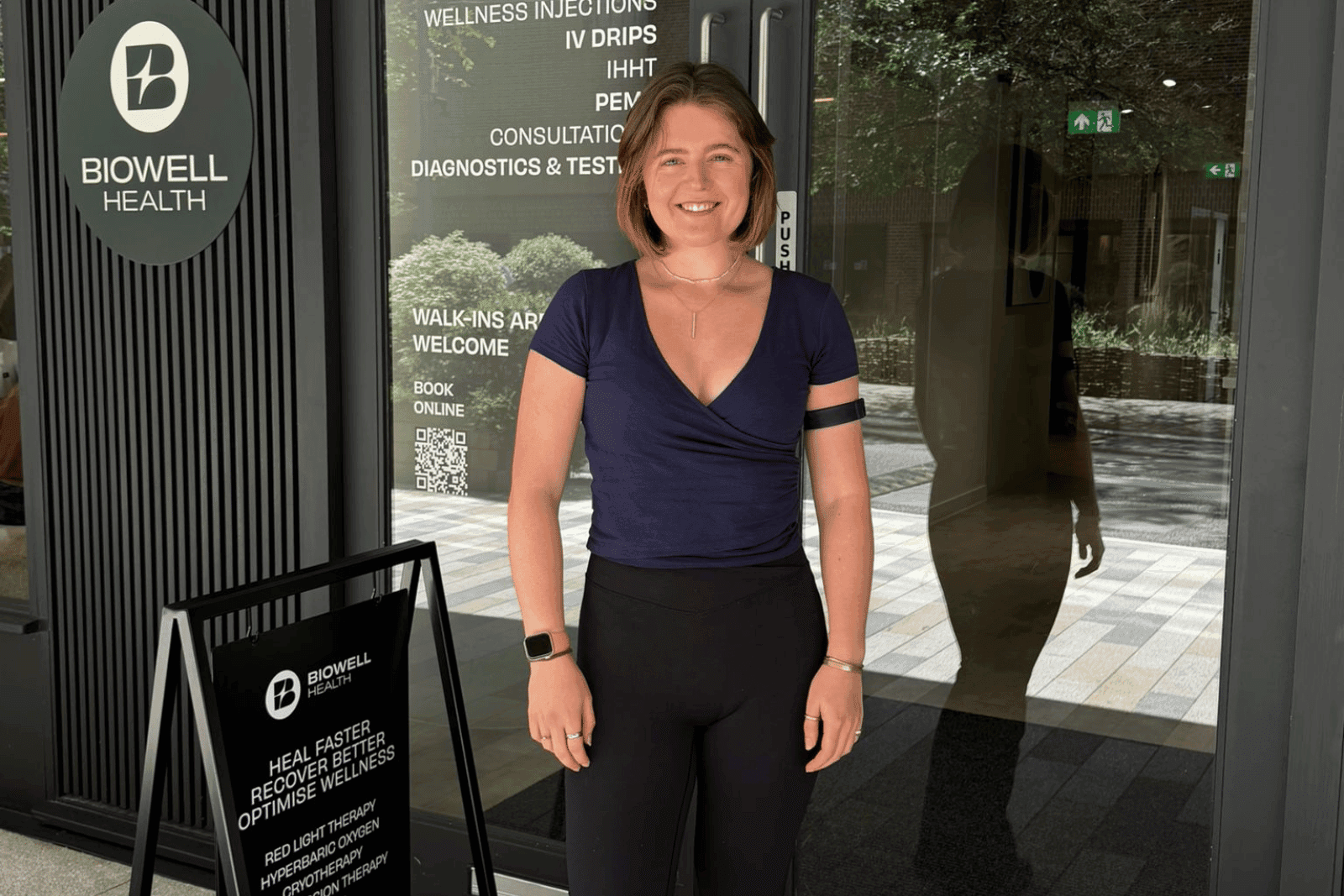
The Day My Body Said No: Megan’s Long COVID Recovery Story
At 21, Megan was a competitive hockey player who said yes to everything. Then COVID hit in April 2020, and five years of fatigue, migraines and POTS followed. In her own words, she describes what finally helped her get to around 80% recovered, and why no single thing fixed it.

The World Cup Effect: How Hyperbaric Oxygen Therapy Became The Most Talked-About Recovery Ritual, And Why We Need A Conversation About Quality
Hyperbaric oxygen therapy has gone from hospital units to World Cup dressing rooms. As interest grows, so does the range of chambers and standards on offer. Here's why the way oxygen is delivered matters, and the questions to ask before you book a session anywhere.
Start with a conversation
A consultation is the honest starting point. We will tell you what is likely to help and what is not worth your money.
Get the Biowell app